Running marketing for a large franchise system is a coordination problem before it is a creative one. You have a national brand to protect, dozens or hundreds of franchise owners to align, and a channel mix that has to work the same way in every market. The right marketing strategy is the framework that makes all of that move in one direction.
This guide breaks down what the strategy includes, the two tracks it has to cover, the channels that carry it, how to centralize and localize the right things, and how to build a plan that scales across your whole system.
Key Takeaways
A franchise marketing strategy is the framework a franchisor uses to coordinate brand-level and local marketing across every location, so the brand grows without losing consistency.
It has to cover two tracks: consumer marketing that drives sales to existing locations, and franchise development marketing that recruits new owners.
The core channels are SEO and local search, social media, email and content, paid media, and reviews, unified by a consistent brand and shared assets.
The winning approach is to centralize what scales, the brand standards, templates, and reporting, and localize what connects, so franchisees can adapt without going off-brand.
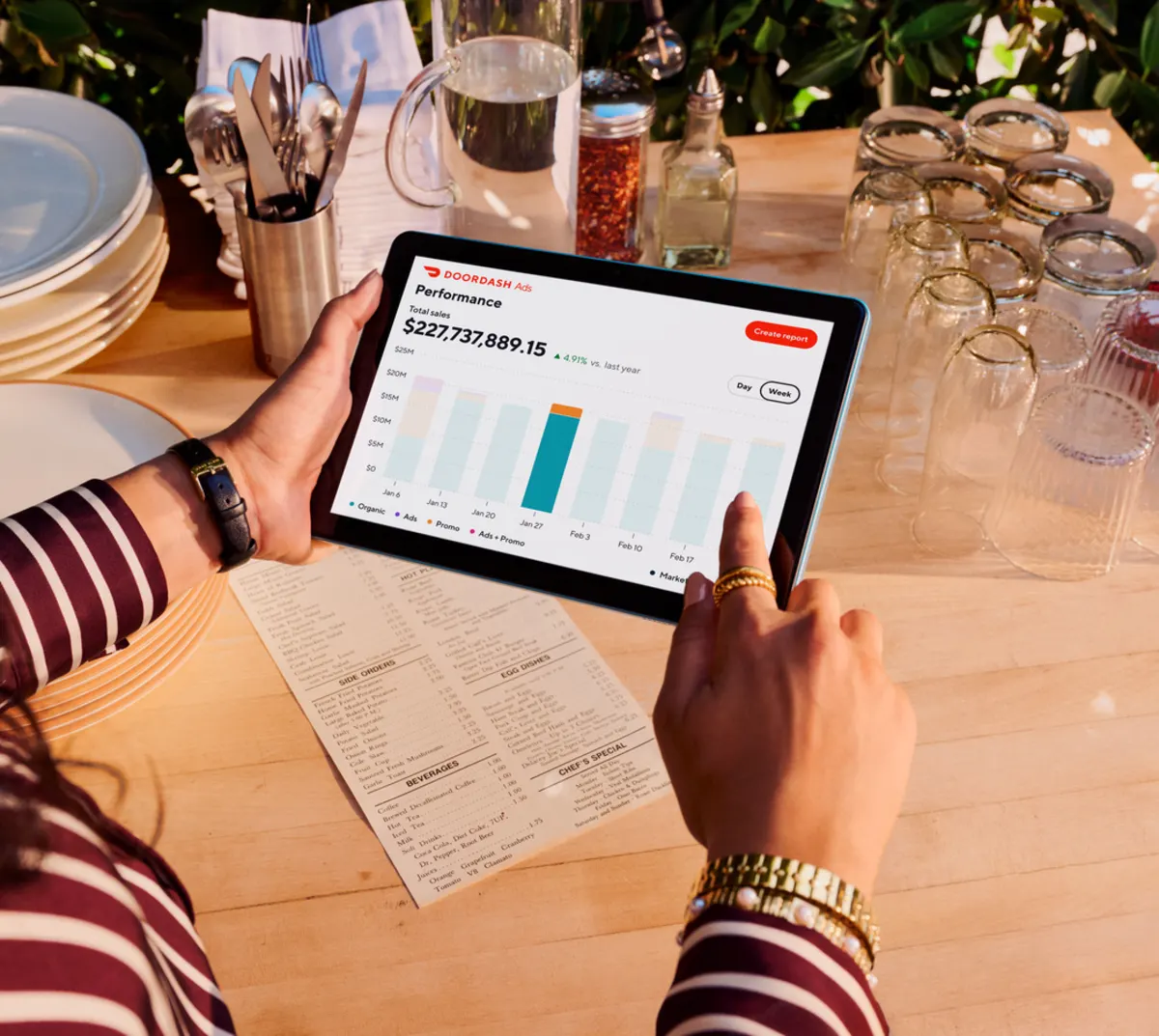
Third-party platforms like DoorDash belong in the plan for restaurant and retail brands, since their advertising can turn national campaigns into orders at the local level.
What is a franchise marketing strategy?
A franchise marketing strategy is the plan a franchisor uses to promote the brand consistently across every location while giving franchise owners what they need to market locally. It sits on top of the brand's business model: the franchisor licenses a proven concept, and the strategy is what keeps that concept recognizable and in demand everywhere it operates.
For a brand at scale, this is less about any single campaign and more about building a repeatable system. It defines the brand every location shares, the channels the brand invests in, and the split between what corporate runs and what franchisees run. Done well, it lets a national campaign translate into hundreds of local executions without drifting off-brand. Think of it as the operational layer of franchise marketing, turned into a framework you can run and refine every quarter rather than a one-time plan that sits in a deck.
Two tracks: consumer marketing and franchise development marketing
Every strategy here has to serve two very different audiences, and keeping them separate is what keeps budgets honest.
Consumer marketing, sometimes called operational franchise marketing, drives customers and orders to locations that are already open. It covers brand campaigns, promotions, social media, local search, and paid media, and for an established brand it is where most of the budget lives.
Franchise development marketing has a different job. Instead of selling to customers, it sells the opportunity to invest in the brand, targeting prospective franchisees with proof points about the business model and the support they will receive. The audience, the channels, and the success metrics look nothing alike, so treating them as one line item is a common and expensive mistake.
This guide focuses on the consumer side, since that is where a large brand's marketing engine runs day to day.
The building blocks of the strategy
A strong strategy is built from a set of channels that reinforce each other. For a brand operating at scale, the aim is to make each one repeatable across every market so results do not depend on which franchisee happens to be good at marketing.
Brand foundation: identity, guidelines, and assets
The strategy rests on a single brand identity that every location shares. Brand guidelines set the rules for voice, logo use, color, and photography, while a central library of brand assets and editable templates gives franchisees ready-made material to adapt. When every storefront, post, and promotion looks and sounds the same, customers learn to recognize the brand in any market, and that familiarity compounds into awareness and repeat business.
These matter more than they sound: they are what let a franchisee produce on-brand creative in minutes instead of going off on their own.
Franchise SEO and local search
Search is where high-intent customers find you. A franchise brand needs strong SEO at the brand level and disciplined local SEO at the location level, including an accurate Google Business Profile for each store and location-specific pages. Search engine optimization done well across the system is what secures a durable online presence and puts every location in front of nearby customers as they search.
Keeping each location's Google My Business listing complete and current is one of the simplest, highest-return tasks in the whole plan.
Social media for franchise systems
Social media is the channel that most rewards a clear structure. When corporate supplies the social media strategy and pre-approved creative, franchisees can maintain a strong social media presence across the main social media platforms without going off-brand. This is where light governance pays off: shared calendars, simple social media management workflows, and social listening to catch what customers are saying by market. LinkedIn plays its own role, both for brand credibility and for recruiting new franchisees.
Handled this way, social media marketing scales without a proportional increase in local effort.
Email and content for multi-location brands
Email marketing and content marketing are the channels you own outright. Segmented email keeps customers coming back with offers relevant to their location, and content builds the organic visibility that supports search. Both scale well when produced centrally and localized lightly.
Franchise paid media strategies
Paid channels buy reach and speed. Digital marketing strategies for franchises usually blend pay-per-click search (PPC), paid social, and, in some systems, direct mail for local reach. Franchise advertising through paid channels gives you control that organic cannot: you can align local spend with national campaigns and adjust it market by market based on results.
Reviews and reputation management
Every location's ratings are visible to anyone deciding where to eat or shop nearby, and on Google and Yelp they often settle that choice before a customer ever sees an ad. That makes reputation management a system-wide job rather than something left to each owner. Set shared standards for how locations ask for and respond to online reviews, and track sentiment by market so problems surface early. That discipline protects the brand equity every campaign is working to build.
Advertising on third-party ordering platforms
For restaurant and retail brands, third-party ordering platforms are now a core part of the plan. Their ads reach customers who are ready to order, in the markets you want to grow. On DoorDash, ad products for restaurants and brand interest targeting help brands reach high-intent customers and drive orders.
Franchise opt-in campaigns let corporate teams recommend campaigns that franchisees can choose to join: Papa John's used interest targeting on DoorDash to boost orders, a good example of national strategy producing local sales.
Centralize what scales, localize what connects
The single most useful principle here is knowing what to centralize and what to hand to franchisees. Centralize the things that benefit from consistency and scale: brand standards, templates, brand assets, national campaigns, marketing support, and reporting. Localize the things that benefit from local knowledge: community involvement, local offers, and the creative touches that make a location feel part of its market.
A centralized platform makes this practical. When corporate can distribute pre-approved, localizable campaigns and see performance across every location in one place, franchisees get speed and corporate keeps control. That is how national strategy actually reaches the local level instead of stalling in coordination, and it is usually the difference between a plan that looks good on paper and one that runs.
How to build your franchise marketing plan
A practical franchise marketing plan comes together in a few steps. Start with market research and competitive analysis to understand your customers and where you stand against other brands, and define the target audience for each type of market you operate in. Watch marketing trends closely, since customer behavior in delivery, search, and social shifts quickly, and a strategy that ignores that ages fast.
From there, build the shared infrastructure: assets, a template library, and the marketing channels every location will use. Decide what is national, what is local, and what is shared, while ensuring franchisees clearly understand the profitability of investing on top of corporate-funded campaigns. Then document how franchisees plug into each channel so onboarding a new location is repeatable.
Finally, put reporting in place that shows performance by location and by channel, because ✏️ franchisees keep investing when they can see, in plain numbers, what each campaign returns to their own store. Review the numbers and adjust each quarter. A plan that is measured and updated will beat a more elaborate one that never changes.
A quick note on scale: the same framework applies whether you run fifty locations or a thousand, but the bigger the system, the more the strategy lives or dies on governance and tooling rather than on any single clever campaign.
Frequently asked questions
What are some effective marketing strategies for a franchise business?
The most effective franchise marketing approaches combine a consistent brand identity with strong local execution. In practice that means disciplined local SEO and Google Business Profile management for every location, a governed social media presence, segmented email and content, paid media that aligns local spend with national campaigns, active review management, and, for restaurant and retail brands, advertising on third-party ordering platforms. The unifying idea is to centralize brand standards and localize execution.
What are the 5 main marketing strategies?
The five commonly cited pillars of a marketing strategy are product, price, place, promotion, and people. For a franchise brand, these translate into a consistent product and offer set by the franchisor, place decisions about locations and delivery channels, promotion split between national and local marketing, and people, meaning the franchisees and staff who deliver the brand experience in each market.
Bringing your franchise marketing together
Scale only becomes an advantage when every location pulls in the same direction. That takes a shared brand, a channel mix planned as one system, and tools that let corporate and franchise owners work from the same playbook. For brands where delivery and pickup drive a meaningful share of orders, DoorDash lets you launch national and local campaigns from a single platform.
See how DoorDash advertising products fit into your plan, and combine them with a solid local franchise marketing approach so national reach turns into orders at every location.